

A practical guide for freight brokers, shippers, and project managers. Stretch flatbed loads need an equipment plan that accounts for cargo support, weight distribution, site access, and the route. Start with the shipment details before committing to a trailer or delivery appointment.
When should you choose a stretch flatbed?
Consider an extendable trailer when a fixed deck cannot provide the required support or a workable loading arrangement for a long piece. A shipment longer than the deck does not automatically require a stretch: the carrier must evaluate overhang, support locations, securement, and the applicable rules.
- Support: The cargo needs bearing points farther apart than a standard deck can accommodate.
- Overhang: A fixed trailer would leave an unsuitable amount of unsupported cargo or create clearance problems.
- One-piece freight: The item must travel assembled, and splitting it is not a practical option.
- Loading access: The proposed trailer must work with the pickup and delivery sites, cranes, and unloading sequence.
Send drawings and support instructions from the shipper or manufacturer. Extending a trailer alone does not guarantee that the cargo is properly supported.
How long can a stretch trailer extend?
Equipment examples include 48-foot trailers that open to 80 feet and 53-foot trailers that open to 90 feet. These are configuration examples, not a specification for every trailer. See Premier Trailer Leasing’s extendable-flatbed overview.
Ask TA Trans to confirm the assigned trailer’s extended length and capacity for your load. Capacity can change with extension and load placement. Cargo length, trailer length, and total loaded vehicle length are different measurements; provide the cargo dimensions and let the carrier assess the complete combination.
What freight commonly uses this equipment?
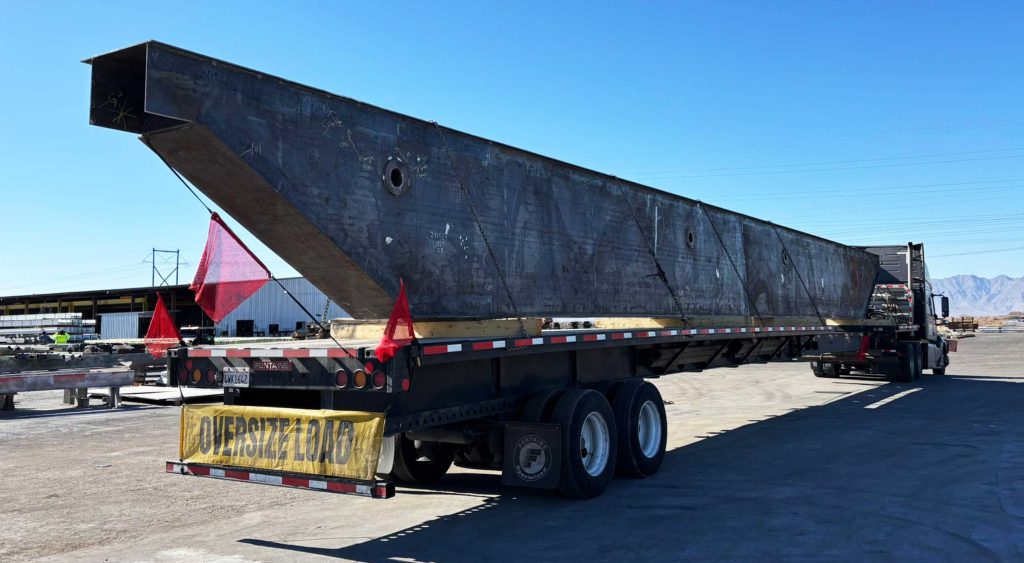
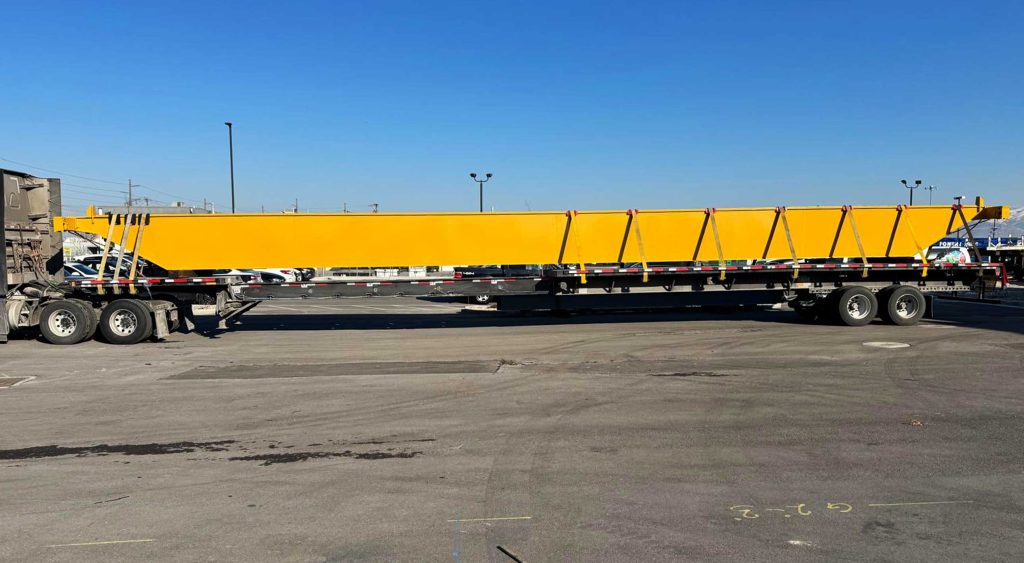
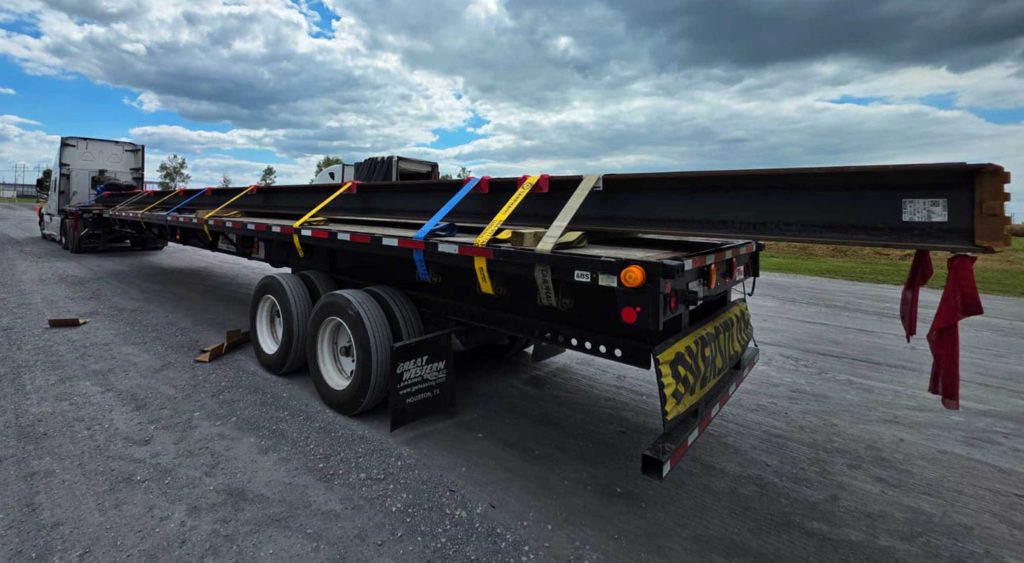
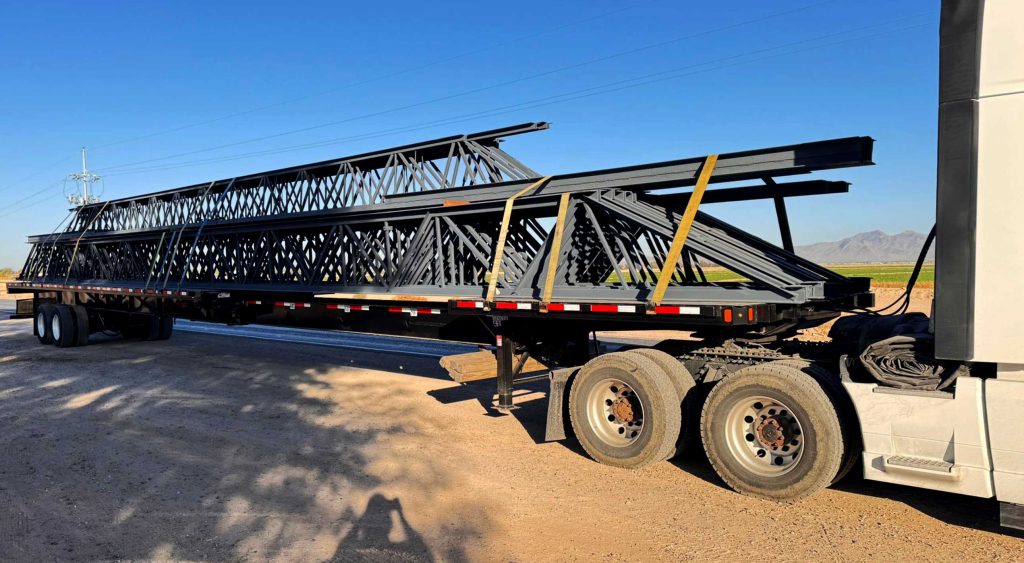
Long pipe, utility poles, bridge girders, structural beams, trusses, precast components, and industrial frames are common candidates. The commodity name alone does not determine the trailer. Two pieces of similar length can have different support, height, or weight requirements.
Construction and structural freight
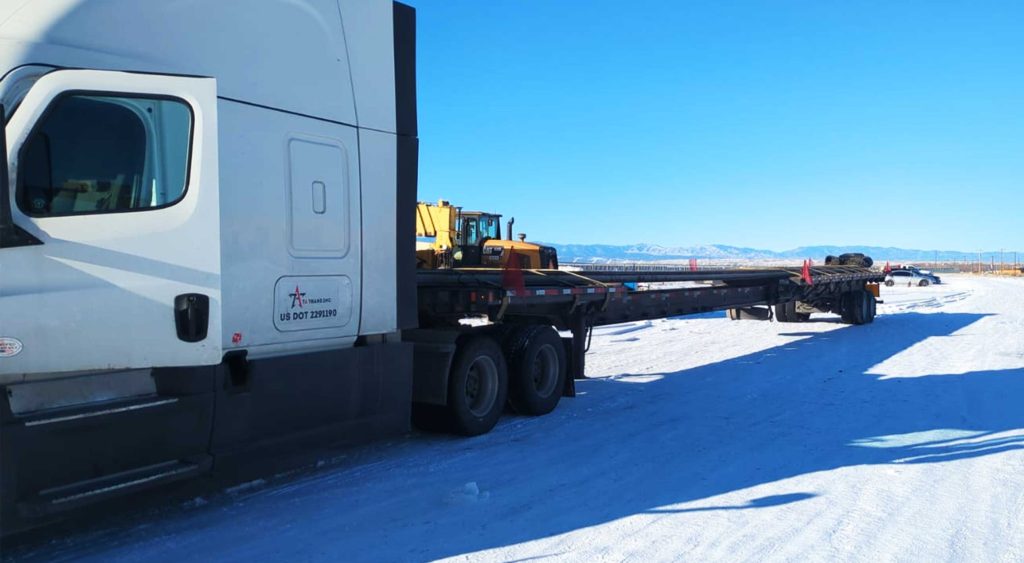
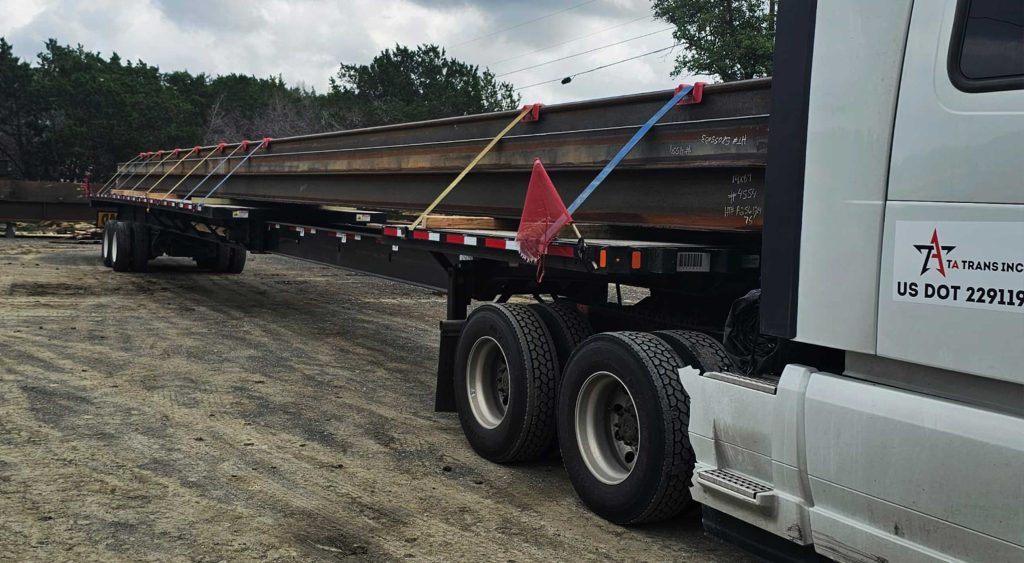
Utility and pipe freight
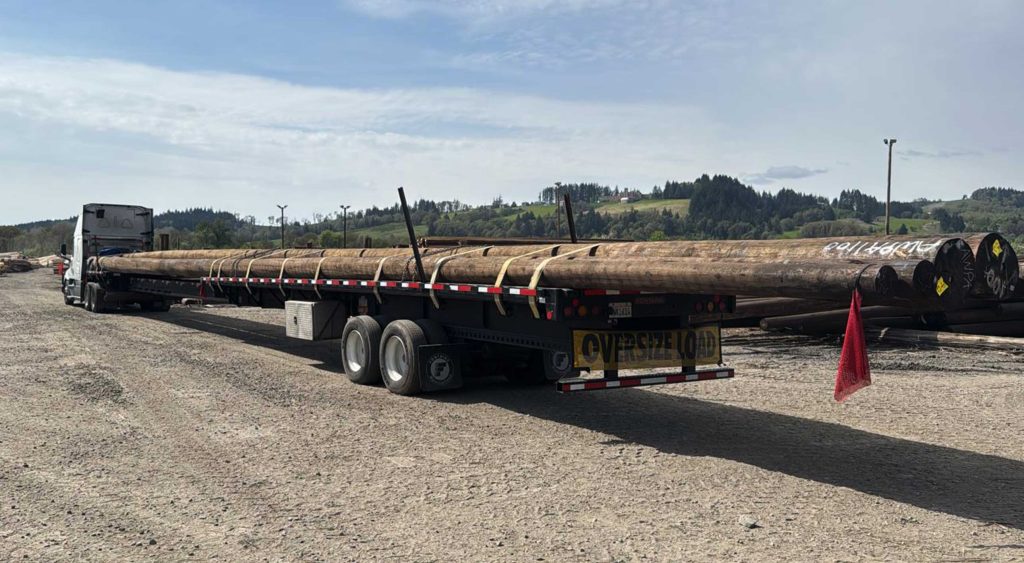
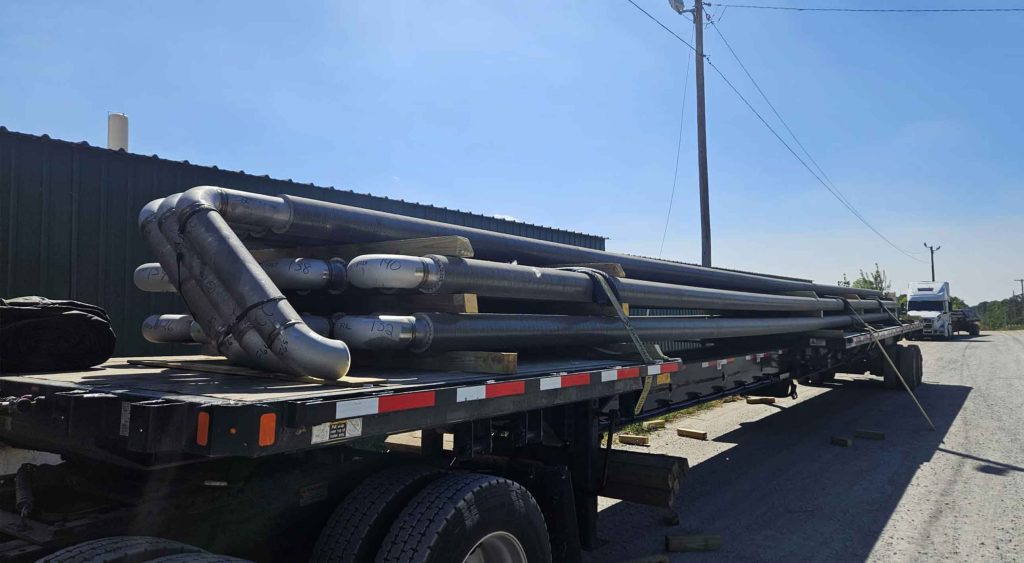
Industrial equipment
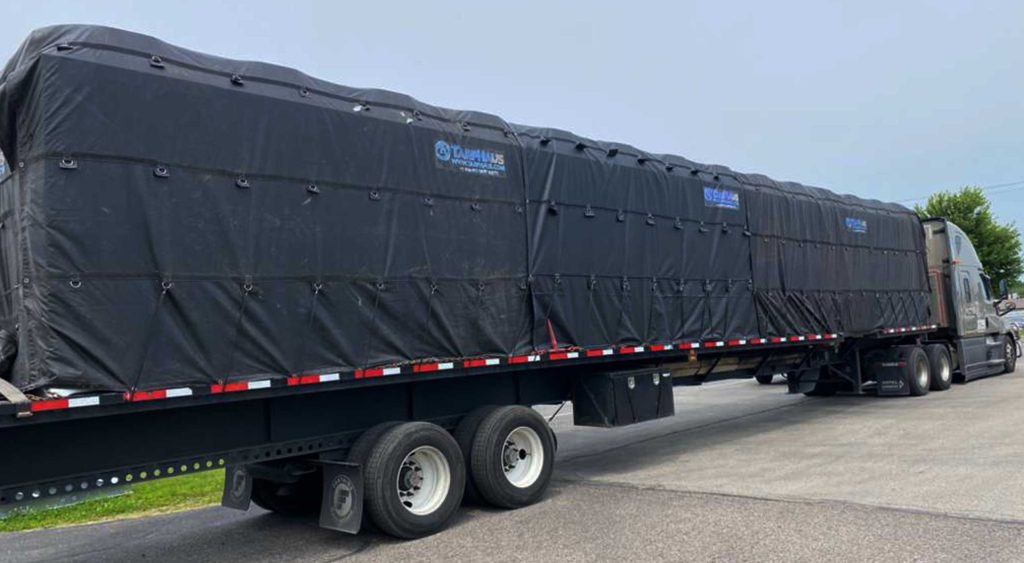
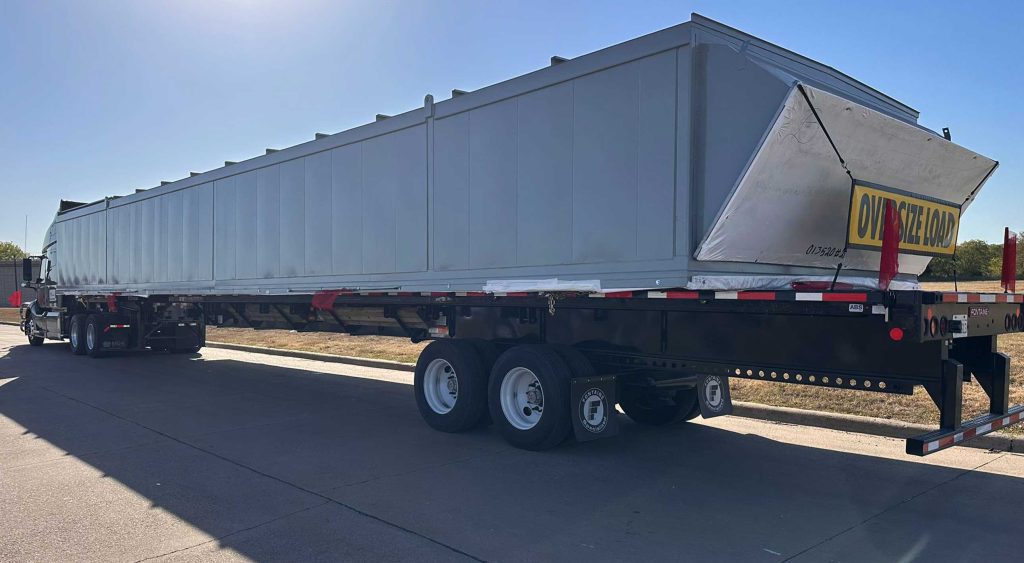
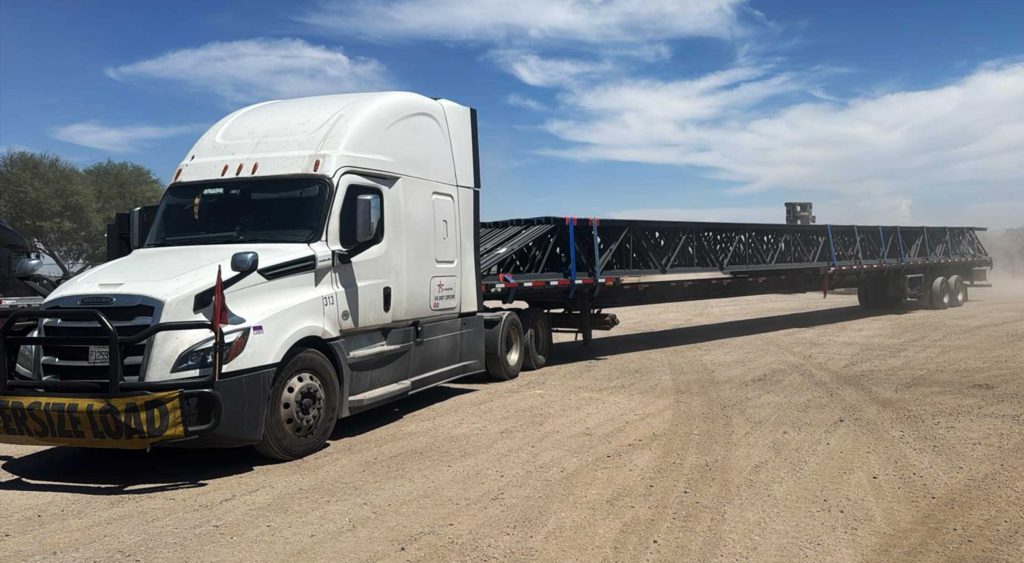
A real TA Trans stretch-load example
TA Trans’s shipment gallery records a 90-foot steel-pipe shipment weighing 40,000 pounds, transported 844 miles from St. Charles, Missouri, to Cameron, Louisiana on a stretch flatbed. These figures describe that shipment, not a standard payload or a quoted transit time for other loads.
What should a broker send for a quote?
A complete request helps the carrier evaluate equipment and identify questions before dispatch. Copy this checklist into your next inquiry:
- Cargo: Description, piece count, and whether the items can be separated.
- Measurements: Length, width, and height of each piece, including packaging and protrusions; identify the units.
- Weight: Total shipment weight and weight per piece, with center-of-gravity information if available.
- Drawings and photos: Required support positions, approved lifting and securement points, orientation, and areas that must not be contacted.
- Locations: Exact pickup and delivery addresses, site contacts, gate access, and known clearance restrictions.
- Handling: Who loads and unloads, available equipment, dunnage, tarping needs, and any appointment requirements.
- Schedule: Ready date, requested delivery window, site hours, and flexibility.
- Special conditions: Staged deliveries, installation sequence, or known route restrictions.
You do not need to design the transport route before requesting a quote. Give the carrier accurate endpoints and any known access issues so routing and permit requirements can be assessed.
Do all stretch flatbed loads need permits?
No. Permit requirements depend on the loaded combination and the jurisdictions it will travel through. Extending the trailer may change those requirements. An oversize load can need permits because of its dimensions even when it is not overweight.
State authorities issue oversize and overweight permits; FHWA does not issue them. Requirements may include approved routes, travel windows, or escorts. Confirm these arrangements with the carrier before fixing the delivery schedule. FHWA’s permit guidance provides further information.
What affects price and lead time?
Ask for a quote based on the complete move. Relevant factors include equipment availability near pickup, the loaded route, permits, escorts where required, loading and unloading time, tarping, and site restrictions.
Confirm what the quote includes and how waiting time, changed dimensions, or rescheduled appointments will be handled. A change to the cargo after booking may require another equipment or permit review.
Book as soon as the dimensions and schedule are reliable. There is no single lead time that works for every long load. Ask the carrier to confirm equipment and permit timing before committing cranes or installation crews.
What should be confirmed before pickup?
- The actual cargo matches the dimensions, weight, and piece count used for planning.
- The assigned trailer and loading arrangement meet the cargo’s support requirements.
- Loading and unloading equipment, staff, and site access are ready.
- Required permits and escorts are arranged, with travel restrictions reflected in the schedule.
- The shipper, receiver, broker, and carrier know who to contact if a detail changes.
Securement must suit the cargo and equipment and meet the applicable requirements. Strap count alone is not a complete securement plan. Share handling instructions early and refer to FMCSA’s cargo securement guidance for the regulatory framework.
Frequently asked booking questions
Does every load over 53 feet need a stretch?
No. Length is one part of the assessment. Cargo support, overhang, weight distribution, securement, and route requirements determine whether a fixed or extendable trailer is suitable.
Does a longer trailer mean a higher payload?
No. Confirm the capacity at the intended extension and loading arrangement. Do not treat a gross vehicle weight figure as cargo capacity.
What if the freight is both long and tall?
Ask the carrier to assess deck height and loaded height as well as length. A different equipment type may be needed; confirm availability before booking.
Can several pieces be planned as one project?
Send the complete piece list and delivery sequence. Ask the carrier to confirm the number of loads, equipment availability, and timing for each movement.
Plan your next long-load shipment
TA Trans Inc. is based in Des Plaines, Illinois. Send your shipment details to operations@tatransinc.com or call (773) 693-2064 to discuss equipment suitability and availability.
Explore our stretch flatbed service and load examples. If you are considering driving this equipment, read our separate stretch flatbed driver guide.