

A stretch flatbed trailer—also called an extendable or telescoping flatbed—is designed to carry freight that is too long for a standard flatbed.
Unlike a regular 48- or 53-foot flatbed, a stretch trailer can extend its deck to provide additional support for long materials such as steel beams, pipe, utility poles, roof panels, bridge components, and fabricated structures. For drivers comparing equipment, a stretch flatbed trailer offers more support for long cargo but also adds planning and maneuvering demands.
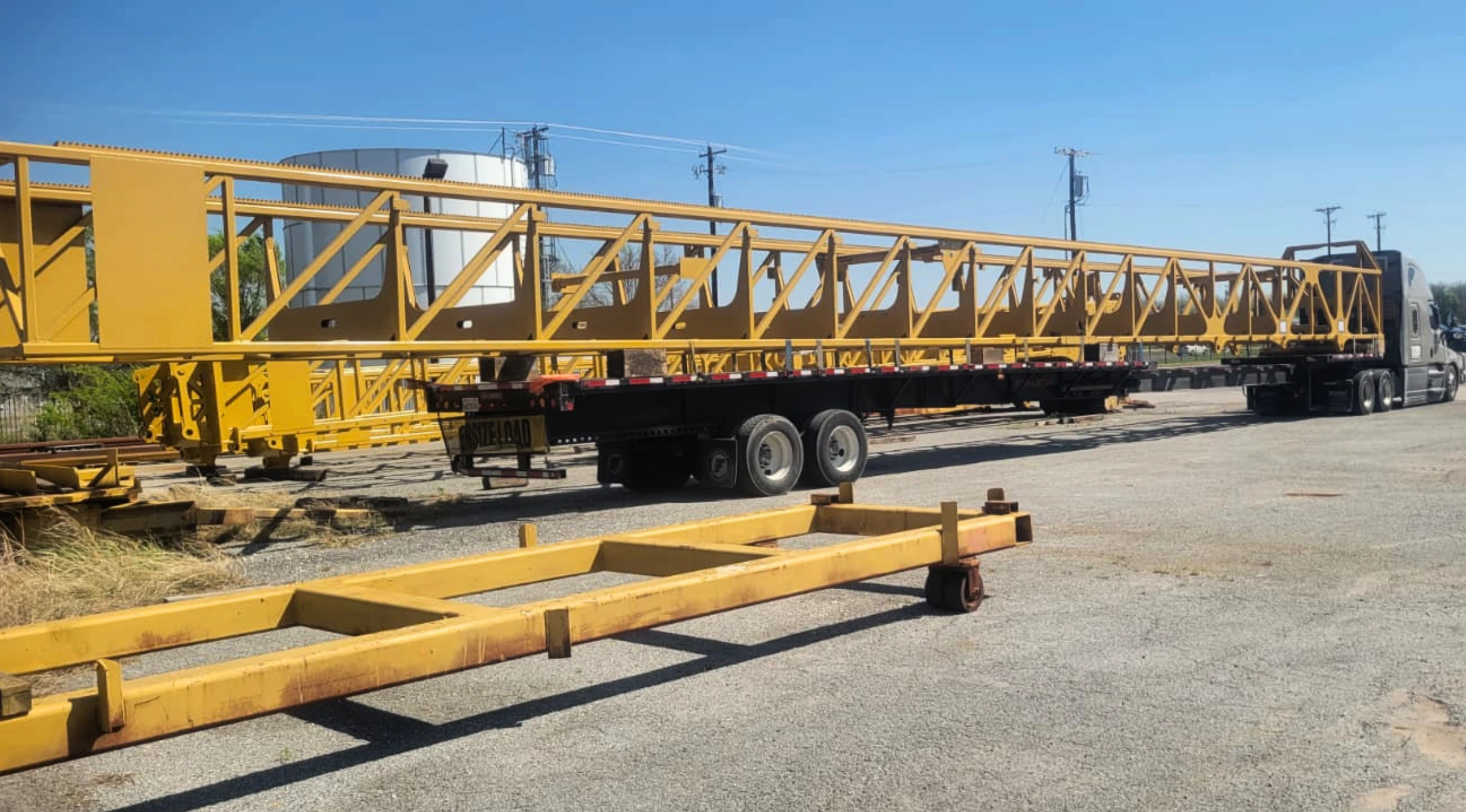
But does a stretch flatbed make a driver’s job easier? Is it more profitable? And what changes when moving from a regular flatbed? Here are the questions drivers ask most often.
How is it different from a regular flatbed?
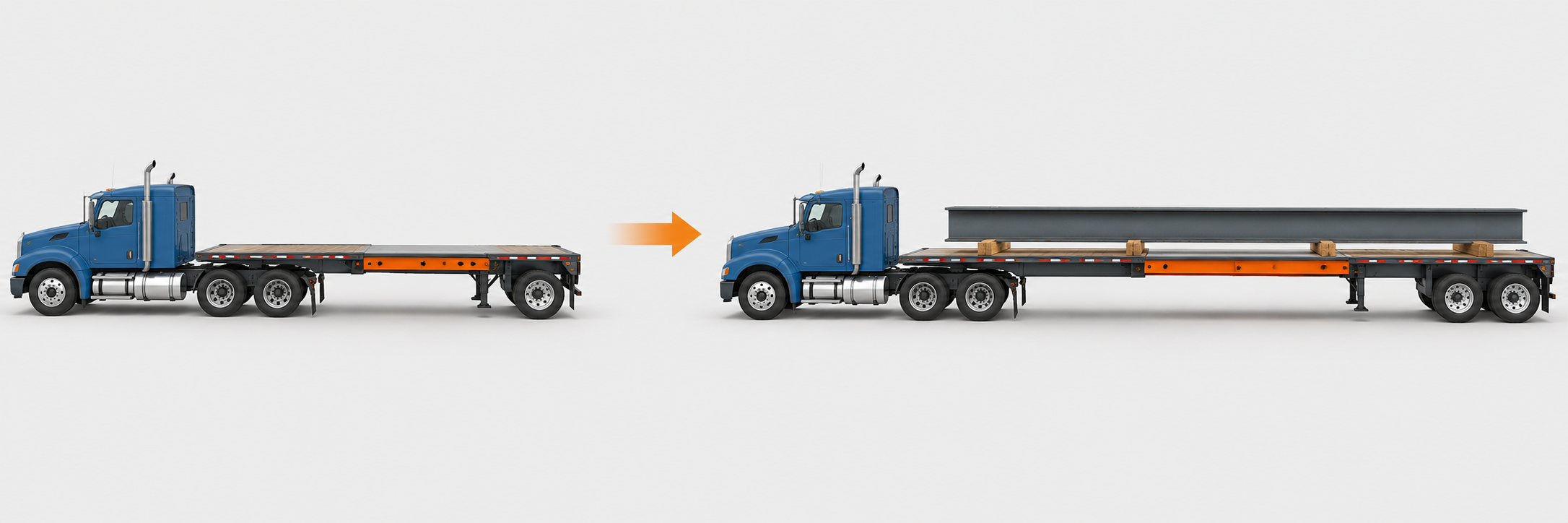
A regular flatbed has a fixed deck length. A stretch flatbed uses telescoping sections that slide apart and lock into position at different lengths.
When retracted, it may look similar to a normal flatbed. When extended, it provides more deck space and better support for long cargo. The purpose is not simply to make the trailer longer. The extension helps reduce excessive overhang and gives long freight more support along its length.
What loads are normally hauled?
Common examples include steel beams, long pipe, utility poles, roof panels, structural steel, bridge sections, wind-energy components, long fabricated equipment, precast concrete sections, and industrial machinery.
A standard flatbed may be able to carry some of these loads, but the freight could have too much overhang or insufficient support. A stretch trailer gives the carrier more options for positioning the load.
How does the extension work?
Most stretch flatbeds use sliding or telescoping beams. Depending on the design, the trailer may be extended by moving the tractor, using a hydraulic system, or using specialized equipment.
Once the desired length is reached, locking pins secure the sliding sections. Some trailers also require additional decking or removable inserts to bridge the extended section.
The driver must verify that the trailer is properly aligned, the extension is at the correct length, all locking pins are fully engaged, the deck is properly installed, and air and electrical lines are routed safely. The exact operating procedure depends on the manufacturer and trailer model.
Can a stretch flatbed haul regular freight?
Yes, many stretch trailers can carry ordinary flatbed freight when retracted. However, that does not always make them a practical replacement for a standard flatbed.
Stretch trailers are often heavier and more complicated. They may have higher maintenance costs, lower available payload, and fewer suitable reload opportunities. This is why experienced owner-operators often recommend having reliable specialized freight before purchasing one.
Is a stretch flatbed harder to drive?
Usually, yes. The trailer becomes more difficult to maneuver as it gets longer. Drivers must pay closer attention to trailer off-tracking, front-corner sweep, rear swing, turning clearance, backing angles, fuel-island space, narrow delivery roads, and obstacles near the trailer.
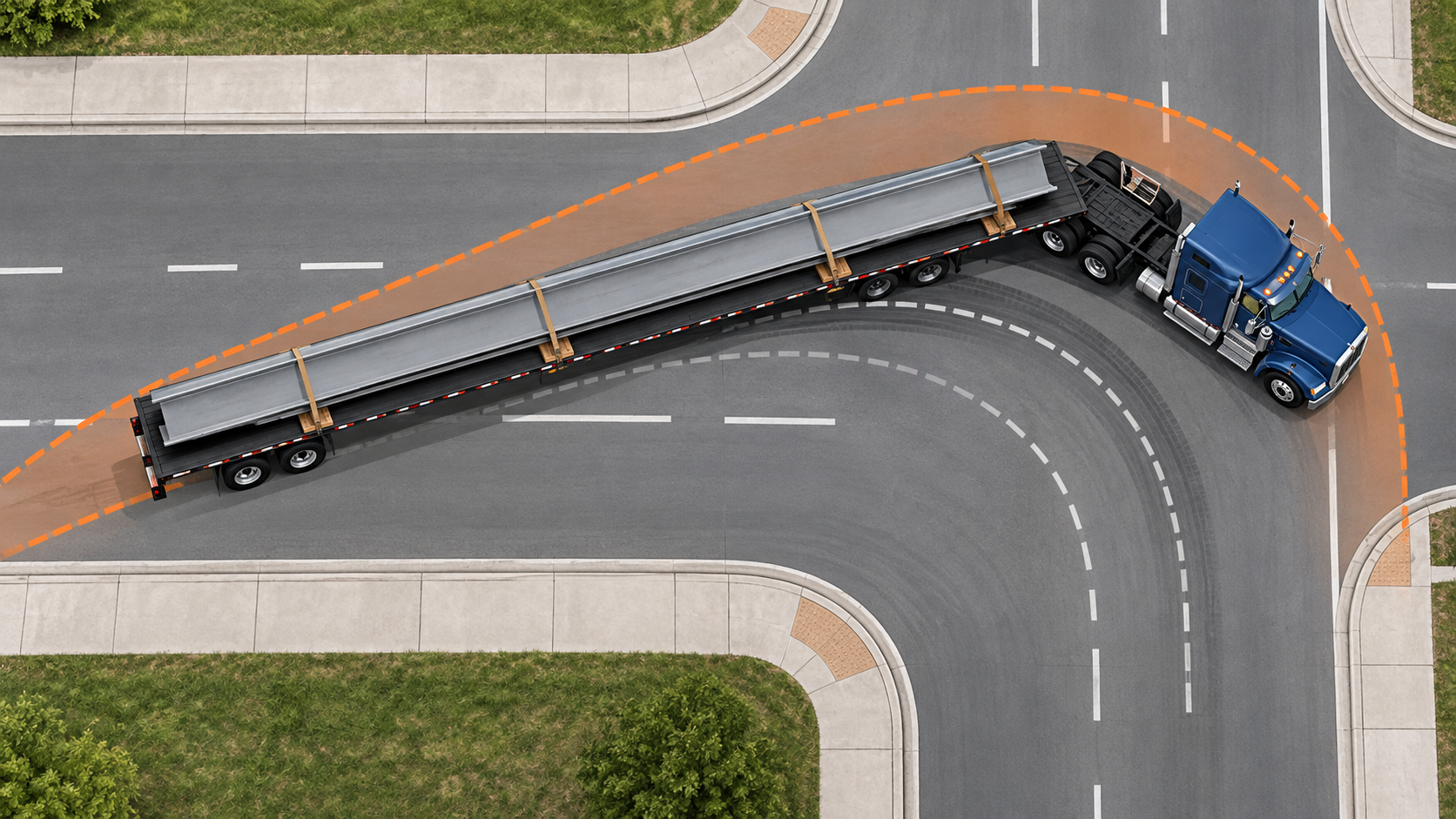
A driver who is comfortable with a regular flatbed may still need time to adjust to a stretch configuration. The trailer may require earlier planning, wider turns, more mirror checks, and slower backing.
Does a stretch flatbed always require a permit?
No. The trailer itself does not automatically mean that every load needs a permit. However, an extended trailer and its cargo may exceed legal length limits. Depending on the total dimensions and weight, the load may require an oversize permit, an overweight permit, a specific approved route, restricted travel hours, or pilot cars.
Requirements can change from one state to another, so drivers should confirm the permit and route requirements before moving the load.
The business case
Sometimes—but not automatically. The potential advantages are access to specialized freight and higher rates on certain loads. The disadvantages include more expensive equipment, additional maintenance, lower payload, permit costs, escort costs, longer loading and unloading times, more empty miles, and fewer backhaul options.
The best business case is usually a carrier with consistent long-load customers, experienced permit staff, and strong reload planning. A stretch trailer can earn more than a regular flatbed when it is kept busy with the right freight. It can lose money when it spends too much time empty.
What changes for drivers?
The biggest changes are not only physical. The driver must also become more involved in planning.
- Measure the freight and select the correct extension length.
- Inspect locking pins, sliding beams, rollers, and decking.
- Secure long cargo against shifting and sagging.
- Plan turns and backing maneuvers.
- Follow permitted routes and travel restrictions.
- Coordinate with dispatch, permit services, shippers, and escorts.
- Perform detailed inspections before and during the trip.
The driver is still responsible for checking the load and securement. Always follow current FMCSA requirements, state rules, and the trailer manufacturer’s instructions.
Questions to ask before accepting a job
- What trailer model will I operate?
- What is the trailer’s empty weight and legal payload?
- What is the maximum extended length?
- Can it be extended while loaded?
- Who handles permits and escorts?
- Is permit and waiting time paid?
- How much of the freight is actually oversize?
- How much empty mileage is typical?
- What training is provided?
- What happens if the extension system fails?
The bottom line
No. A stretch flatbed can be an excellent tool for the right freight and the right operation. It gives carriers access to long loads that a standard flatbed may not handle safely or efficiently.
However, it also requires more planning, more inspection, more careful maneuvering, and a stronger understanding of permits and securement.
The most important question is not simply, “Can this trailer haul long freight?” It is: Do I have enough reliable freight to justify the additional complexity?
Trailer specifications, permit requirements, and securement rules vary. Verify the current requirements for your route and equipment before operating.
For more trucking insights from TA Trans Inc, follow our driver-focused articles.