

PART 2 · A practical guide for company drivers and owner-operators
A stretch flatbed load can come with an attractive payout. The next question is how that load fits into your working week. How far will you run empty? How long does the trip take? What happens after delivery?
This guide to stretch flatbed pay uses two TA Trans shipment examples to show what to look at beyond the headline rate. This is Part 2 of our stretch flatbed series for drivers and owner-operators.
Does stretch flatbed work pay more?
It can, but one load’s payout does not establish your weekly earnings. Company drivers need to understand how the carrier pays for miles, waiting, and additional work. Owner-operators need to compare load revenue with the costs and time needed to earn it.
The two examples below include empty miles in their reported mileage. That gives a more useful starting point than looking at loaded miles alone.
Two real TA Trans loads—with empty miles included
These are individual shipment examples supplied by TA Trans, not average rates or guaranteed earnings. All dollar amounts are gross load revenue before expenses, not driver take-home pay.
LOAD 01 · 72-foot steel beams
Glendale, Arizona → Apple Valley, California
$6.88/miGross revenue per total mile, including reported empty miles
- Gross load revenue
- $2,500
- Total reported miles
- 363.53 miles, including empty miles
- Cargo weight
- 39,312 lb
- Pickup → delivery
- September 22 → September 23, 2026
- Tarp requirement
- No tarp
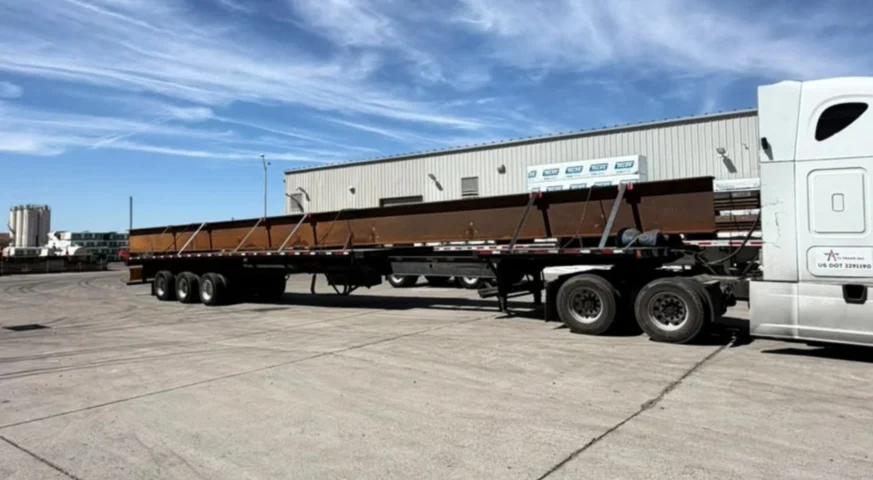
The calculation: $2,500 ÷ 363.53 total miles ≈ $6.88 per mile.
This is a useful example of why the mileage basis matters. The stated rate includes empty miles; it is not simply the payout divided by loaded distance. However, pickup and delivery dates do not tell us the actual hours spent loading, driving, or waiting.
The planning question: Does the appointment schedule leave the truck in a workable position after delivery? A short trip still needs a plan for loading time, delivery access, and the next move.
LOAD 02 · Three 75-foot utility poles
Bristol, Indiana → Fort Stockton, Texas
$6.40/miGross revenue per total mile, including reported empty miles
- Gross load revenue
- $9,500
- Total reported miles
- 1,484 miles, including empty miles
- Cargo weight
- 36,000 lb
- Pickup → delivery
- September 24 → September 28, 2026
- Tarp requirement
- No tarp
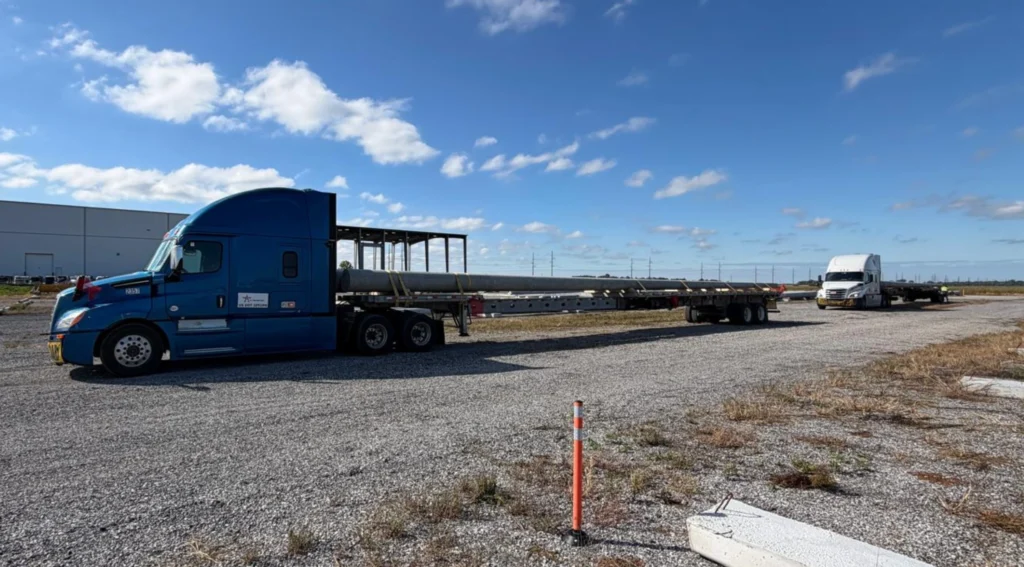
The calculation: $9,500 ÷ 1,484 total miles ≈ $6.40 per mile.
The utility-pole shipment has the larger gross payout, while the steel-beam shipment has the slightly higher gross rate per total mile. Neither number, by itself, tells you which load leaves more money after expenses.
The planning question: How do pickup and delivery appointments affect the days the truck is committed? Before accepting similar work, check the delivery window, any waiting involved, and the realistic next move.
A note about the equipment descriptions
The photos appear to show extendable-trailer setups. The steel-beam rate confirmation does not explicitly name the trailer type; the utility-pole confirmation lists “Flatbed 48.” Trailer selection should be confirmed against the actual equipment and load requirements, not inferred from a booking label alone.
What do these examples actually show?
They show the type of long freight TA Trans handles and the supplied revenue and mileage for two shipments. They do not, on their own, establish profit, a guaranteed reload, or the exact reasoning used when the loads were booked.
For drivers evaluating a carrier, the useful next step is to ask the team to walk through four practical questions:
01 · EQUIPMENT
Does the assigned trailer fit the cargo dimensions, weight, and support requirements?
02 · MONEY
What revenue reaches you, and which costs or deductions apply?
03 · TIME
How do appointments, loading, and waiting affect truck availability?
04 · NEXT MOVE
Where does the truck finish, and what is the realistic plan after delivery?
Why empty miles matter to stretch flatbed pay
An empty truck still uses fuel and puts wear on equipment. DAT’s explanation of deadhead trucking outlines why those miles matter when evaluating freight.
Always ask which empty miles are included. Is it the distance to pickup only? Is repositioning after delivery included? A possible reload is not the same as a confirmed reload. Both TA Trans examples use mileage reported as including empty miles, but we are not assuming an unreported backhaul.
Company drivers: what will actually reach your paycheck?
The carrier’s gross load revenue is not your paycheck. Ask for written pay terms and, where available, a comparable settlement example. Before switching, get clear answers to these questions:
- Are empty miles paid, and at what rate?
- If pay is percentage-based, which revenue does that percentage apply to?
- How are detention, layovers, tarping, and extra stops paid?
- Is extending or retracting the trailer covered separately or included in the pay arrangement?
- What happens to your pay when a shipment is delayed?
- What training is provided, is it paid, and how does the work affect home time?
Both loads shown here required no tarp. That is a detail of these shipments, not a promise that every stretch load will be tarp-free.
Owner-operators: calculate what is left after the trip
For an owner-operator, a strong gross rate is only the starting point. Use your own operating costs instead of someone else’s assumed profit margin. OOIDA’s cost-per-mile resources can help you organize those costs.
- Truck and trailer payments or rental costs.
- Fuel for loaded and empty miles.
- Insurance, tires, maintenance, and trailer-extension equipment upkeep.
- Permits, escorts, and tolls that you are responsible for paying.
- Carrier, dispatch, or factoring deductions that apply to your arrangement.
- Your own compensation and a reserve for downtime.
Confirm who pays each expense and whether it is reimbursed separately. Do not count the same cost twice. For a closer look at fuel, see our guide to diesel prices and fuel cost per mile.
What happens after the stretch load delivers?
Many extendable trailers can carry suitable regular freight when retracted, but dimensions, empty weight, and capacity depend on the trailer. Equipment flexibility does not guarantee a reload.
Ask where the truck will finish, what freight is realistically available, how much extra empty mileage might be needed, and whether the timing works. Neither example above includes a confirmed next load, so we do not treat one as part of the result.
Should you switch from regular flatbed to stretch work?
Look at several complete working weeks, not the best single rate. Compare gross revenue or driver pay, all miles, operating costs, waiting, days committed, and time at home.
Stretch work may be a good fit when the equipment training, pay agreement, freight, and schedule fit your situation. Ask about actual lanes, trailer support, and who handles coordination when a load changes. The goal is a workable operation—not just a more impressive load photo.
Follow the freight—not just the headline rate
TA Trans regularly shares real load photos and shipment details on social media. Follow along to see the freight we handle over time, and use those examples to ask specific questions about the work.
Facebook · Instagram · LinkedIn · Stretch trailer load gallery
These posts are shipment examples, not live shipment tracking or a guarantee that similar freight will be available every week.
Ask before you switch.
Talk through pay, empty miles, training, waiting time, and the plan after delivery with our team.
Call Tom: (773) 435-9283
Stretch flatbed pay: frequently asked questions
Tap a question to see the answer.
Does stretch flatbed work always pay more?
No. A higher gross load rate does not guarantee higher take-home pay. Your agreement, total miles, operating costs, and time committed all matter.
Do the $6.88 and $6.40 rates include empty miles?
Yes. TA Trans supplied the mileage for both examples as including empty miles. The rates are gross load revenue divided by those reported total miles, rounded to the nearest cent.
Are these figures driver earnings or profit?
No. The $2,500 and $9,500 figures are gross load revenue before expenses. Company-driver pay depends on the pay agreement; owner-operator profit depends on applicable costs and deductions.
Can a stretch trailer haul regular flatbed freight?
Many can carry suitable regular freight when retracted. Suitability depends on the actual trailer, cargo, capacity, and loading requirements. It does not guarantee a reload.
What should I ask before making the switch?
Company drivers should confirm pay terms, paid empty miles, delay pay, training, and home time. Owner-operators should also review all trip costs, deductions, trailer costs, and the realistic plan after delivery.